
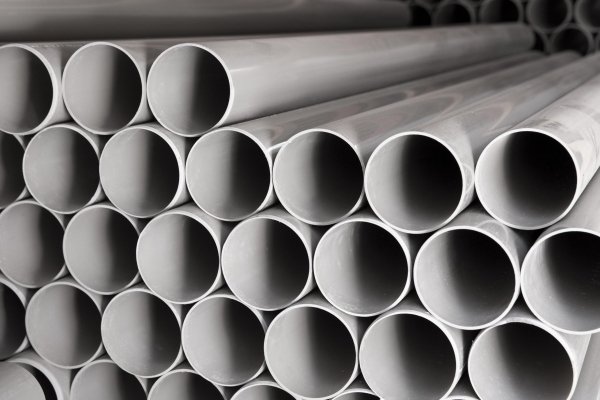
HDPE pipes carry water, gas, and chemicals under constant pressure. If the pressure rating is wrong, the pipe can fail early. Getting this calculation right protects your entire project. Pressure rating tells you how much internal force a pipe can safely handle. It depends on the pipe material, its wall thickness, and the temperature it will operate in.
Quick Answer
The pressure rating (PR) of an HDPE pipe is calculated using this formula:
PR = [2 x HDS x fT] / (DR – 1)
Here, HDS is the hydrostatic design stress of the material, fT is a temperature adjustment factor, and DR is the dimension ratio (outer diameter divided by wall thickness). A higher DR means thinner walls and a lower pressure rating.
Pressure rating, also called “PN” (Pressure Nominal), shows the maximum working pressure a pipe can handle at 20°C over its service life. Every HDPE pipe used in the Gulf region must handle daily pressure loads. Water networks, irrigation lines, and gas systems all depend on this number. A pipe rated too low will crack or burst. A pipe rated too high adds unnecessary cost. Correct calculation balances safety and budget.
Dimension Ratio (DR) is the pipe’s outer diameter divided by its minimum wall thickness. Standard Dimension Ratio (SDR) is the industry term used most often.
This ratio is the single biggest factor in your pressure rating calculation.
HDS is the long term stress rating a pipe material can safely sustain. It comes from lab testing under ASTM and ISO standards.
Common HDPE materials include:
| Material Grade | Typical HDS at 20°C | Common Use |
| PE80 | 6.3 MPa | Low pressure water, drainage |
| PE100 | 8.0 MPa | Water mains, gas, industrial lines |
| PE100-RC | 8.0 MPa | Trenchless and rocky soil installation |
PE100 pipes are now the industry standard across UAE, Oman, and Saudi Arabia because they allow thinner walls at the same pressure rating, reducing material cost.
Follow these steps to calculate the pressure rating of any HDPE pipe:
For example, a PE100 pipe with an SDR of 11 at 20°C gives a pressure rating close to 16 bar, which suits most municipal water networks.
Heat lowers the pressure rating of any plastic pipe. This is critical for buyers in the Gulf, where ground and ambient temperatures run high for most of the year. As temperature rises, the de-rating factor (fT) drops below 1.0, which reduces the final pressure rating. Pipes buried underground are cooler than surface-exposed lines, so burial depth also affects the real-world rating. Always ask your supplier for the correct de-rating table for your region’s soil and climate conditions.
Sudden changes in flow velocity create pressure spikes called water hammer. This can happen when a valve closes quickly or a pump switches off.
Systems with pumps, valves, or frequent flow changes need extra surge allowance built into the design, not just the base pressure rating.
Radius Star Piping is an ISO 4427-certified manufacturer of HDPE pipes and fittings, serving projects across the UAE, Oman, and Saudi Arabia. We produce PE100 pipes from 20mm to 1200mm in diameter, covering PN4 to PN32 pressure classes. Whether your project needs standard pressure ratings for water distribution or higher classes for industrial and gas applications, our engineering team helps you select the correct SDR and pressure class for your site conditions.
Contact Radius Star Piping for technical datasheets and pressure rating support tailored to your project.
Most municipal and residential water networks use PN10 to PN16 rated HDPE pipes, though industrial and gas lines may need higher PN classes depending on demand.
Diameter itself does not change pressure rating. What matters is the SDR, which is the relationship between diameter and wall thickness.
No. PE100 has a higher HDS and allows thinner walls at the same pressure rating, so the two are not directly interchangeable without recalculating SDR.
Higher temperatures lower the pressure rating through a de-rating factor. Pipes exposed to direct sun or shallow burial need this adjustment applied.
ISO 4427 and ASTM standards set the testing and classification methods used to determine pressure ratings worldwide.