
You’ve got a big HDPE pipe project ahead of you, and suddenly you’re faced with a decision that feels more complicated than it should be. Should you go with a manual welding machine or invest in an automatic one?
We have seen this question stump even experienced contractors. The truth is, there’s no villain in this story. Both have their place, and picking the wrong one can either waste your money or compromise your project quality.
Let us walk you through this in a way that actually makes sense.
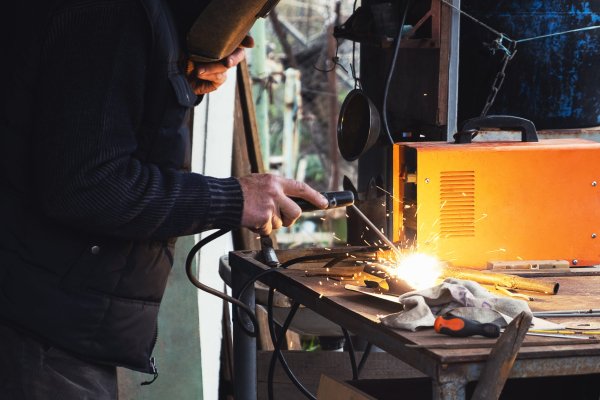
Think of a manual welding machine as giving complete control to your operator. An experienced welder stands there, torch in hand, controlling the speed, heat, direction, and everything else in real-time. It’s like the difference between having a skilled driver at the wheel versus a car on autopilot.
We have worked with incredible welders who can look at an odd-shaped joint and know what to do. They adjust on the fly, react to what they’re seeing, and produce beautiful welds that fit exactly what’s needed. That’s the magic of manual welding. When you’re dealing with custom fabrication, irregular pipes, or one-off repairs, having that human touch and adaptability is invaluable. The downside? You’re entirely dependent on operator skill. A tired operator produces different results than a fresh one. Different operators might do the same job slightly differently. And it takes time. Lots of time.
Now imagine removing that operator from the equation. An automatic welding machine is programmed with specific parameters and then just does its thing. Speed, heat, movement, and duration, everything is controlled by the machine.
Here’s where automatic machines shine: consistency. Every single weld comes out identical to the last one. Feed 500 similar pipes through, and you get 500 identical welds. No variation. No operator fatigue affecting quality. No human error. For high-volume work, this technology is game-changing. The machine works continuously, and costs per unit drop dramatically over large batches. At Radius Star Piping, when we’re churning out standard HDPE fittings for big projects, automatic machines are absolute workhorses.
The difference between manual and automatic welding machines isn’t just technical. It’s about understanding your business model.
Manual gives you control and flexibility. Your operators become valuable assets who can solve problems creatively. This approach is perfect if you’re handling diverse projects or if customization is your selling point. Automatic gives you predictability and scale. Your business becomes less dependent on individual operator skill, which actually reduces risk. You can take on bigger contracts because you know exactly what your output will be.
We have seen contractors make costly mistakes by choosing the wrong path. A small shop that bought expensive automatic equipment they didn’t need. A large manufacturer that stuck with manual machines when automation would have tripled their output. Both cost them money.
So, which welding machine is better? It depends entirely on what you’re actually doing. If you’re running a small to medium-sized business that specializes in fabricating and repairing custom HDPE pipes, stick with manual. You need that flexibility. Your operators’ skill is your competitive advantage. Investing in their training pays dividends.
If you’re a large contractor with predictable, high-volume work, automatic machines make financial sense. You’ll recover your investment quickly and enjoy consistent output that keeps clients satisfied. Want to know what smart companies do? They use both. We do this at Radius Star Piping. Standard production goes on automatic equipment. Custom work, repairs, and special projects use manual machines. It’s the best of both worlds.
Before you decide, ask yourself these:
What’s your typical project? Is it standardized or custom?
How much volume are we talking about annually? Is it high enough to justify automatic equipment?
What’s your budget really like? Can you stomach the upfront cost of automation?
What’s your team like? Do you have skilled operators, or would you prefer to rely on machines?
How urgent is speed? Do you need to compress timelines?
At Radius Star Piping, we’ve dealt with every scenario imaginable across the UAE, Oman, Saudi Arabia, and Bahrain. The answer isn’t one-size-fits-all.
If you’re still unsure, talking to someone who’s worked in the field across multiple project types helps. We’ve guided countless clients through this decision, and what works for your neighbor might not work for you.
Q1: Can a manual welder produce welds as good as automatic machines?
Absolutely, and sometimes better. A skilled manual operator can match or exceed automatic machine quality, especially on complex work. The difference is that automatic machines are consistent every single time, while manual quality depends on the operator’s skill level and daily form. For high-volume repetitive work where consistency matters most, automatic wins. For custom or complex work where adaptation matters, a good manual operator often produces superior results.
Q2: How long does it take to pay back an automatic welding machine investment?
That depends on your volume and labor costs. Generally, if you’re running high-volume work, an automatic machine pays for itself within 12 to 24 months through labor savings and increased output. If your volume is moderate or irregular, payback takes longer and might not be worth it. Calculate the costs for your specific situation before making a commitment.
Q3: What if we need both capabilities at different times?
That’s actually smart thinking. Many successful operations maintain both manual and automatic capability. You can rent equipment for seasonal peaks or purchase both if your budget allows. This approach gives you maximum flexibility and keeps you from being locked into one way of working.