
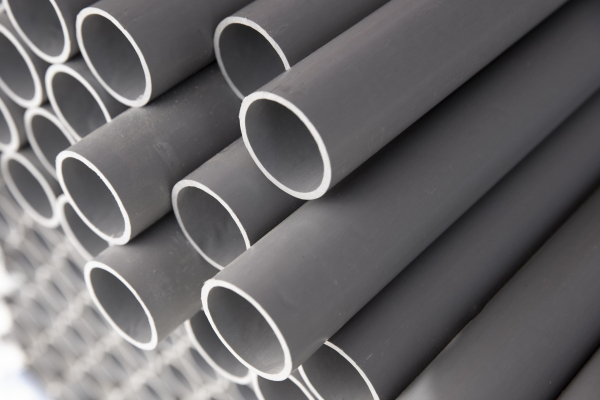
Picking the wrong HDPE pipe grade is not always obvious at the start. The pipe looks the same. It fits the same. It even installs the same. But once the system is running under pressure, the difference shows up quickly.
An undersized grade fails under pressure. An oversized grade wastes money. Both outcomes hurt the project.
The good news is that choosing the right HDPE pipe grade is not complicated once you understand four things: the grade itself, the pressure rating, the SDR value, and the operating conditions at your site.
This guide walks you through each one in plain language.
When you see PE80 or PE100 on an HDPE pipe, it refers to the material strength. Specifically, it tells you how much long-term pressure the pipe material can handle before it starts to degrade.
PE100 is stronger than PE80. For the same pipe diameter and pressure requirement, a PE100 pipe can have a thinner wall than PE80 and still perform better. That thinner wall means less material, which means a lower cost per meter of pipe.
PE80 has been used reliably for decades. It still works well for lower-pressure applications and chemical drainage systems. But for most new pipeline projects in the UAE, Saudi Arabia, and Oman today, PE100 is the standard. Infrastructure developers and government authorities in the Gulf region now specify PE100 in most project requirements.
If your project specification does not tell you which grade to use, go with PE100. You will almost always be right.
SDR stands for Standard Dimension Ratio. It is a simple number that tells you the relationship between the pipe’s outer diameter and its wall thickness.
A pipe with SDR 11 has a wall that is thicker relative to its diameter. A pipe with SDR 17 has a thinner wall. Thicker wall means higher pressure rating. Thinner wall means lower pressure rating.
Here is a simple way to remember it: the lower the SDR number, the stronger the pipe.
For a PE100 pipe, SDR 11 gives you a pressure rating of PN16. SDR 17 gives you PN10. SDR 26 gives you PN6.3.
For gas distribution pipelines in Saudi Arabia, SDR 11 PE100 is the common choice. For municipal water supply in UAE and Oman, SDR 17 PE100 covers most systems. For gravity drainage or low-pressure irrigation, SDR 26 or higher works fine.
When someone gives you a project specification and says “PE100, SDR 11”, they are telling you both the material strength and the wall thickness in one short line. Now you know exactly what that means.
The pressure ratings on HDPE pipes are calculated at 20 degrees Celsius. But in the Gulf region, pipes often operate at much higher temperatures. A PE100 pipe rated at PN16 at 20 degrees may only perform at PN10 when the operating temperature climbs to 40 degrees.
For underground pipelines where soil temperature stays relatively stable, this is less of a concern. For above-ground pipelines in UAE or Saudi Arabia that sit in direct sunlight all day, this is very important.
Always ask your pipe supplier for the temperature derating chart. Apply the correct reduction factor based on the actual expected operating temperature at your site. This one step prevents a lot of problems in hot-climate installations.
Different projects need different things. Here is a clear breakdown.
Water supply and distribution: Use PE100 with a WRAS or equivalent food-safe certification. This confirms the pipe will not affect drinking water quality. SDR 17 at PN10 covers most distribution networks. Radius Star Piping supplies WRAS-approved HDPE pipes that meet the requirements for water projects in UAE and Oman.
Natural gas pipelines: Use PE100 at SDR 11 for most gas distribution work. Gas pipelines need to handle both pressure and impact, and PE100 delivers on both. In Saudi Arabia, gas pipeline projects follow international standards like ISO 4437, so check the project specification carefully.
Industrial and chemical use: PE100 handles most industrial chemicals better than PE80. But before you select a grade, ask your supplier for a chemical resistance chart and check that the specific fluid you are handling is compatible with HDPE. Not every chemical works safely with the same grade.
Irrigation and agricultural systems: Pressure requirements are lower here. PE80 or PE100 at SDR 17 or SDR 26 works well for most irrigation networks. Match the SDR to your system operating pressure and you will be fine.
Pipe Color
In many GCC countries, blue HDPE pipe is for water and yellow is for gas. Some project specifications and local authorities have strict requirements on this. Always check before you order.
UV Protection
Pipes installed above ground and exposed to sunlight need carbon black added into the material for UV protection. Most quality HDPE pipes already include this, but it is worth confirming with your supplier, especially for long-term outdoor installations in UAE and Saudi Arabia.
Certifications
For projects in UAE, Oman, and Saudi Arabia, look for pipes that carry ISO 4427, ISO 4437, or EN 12201 certification. These confirm the pipe meets international quality and performance standards. Radius Star Piping produces ISO-certified HDPE pipes that comply with the standards used in infrastructure, water, and gas projects across the GCC.
You do not need a textbook to select the right HDPE pipe grade. You just need clear answers to these four questions:
What pressure will the system operate at? This determines your SDR and pressure class.
What will flow through the pipe? This determines grade and any certification requirements.
What is the operating temperature? This tells you whether you need to apply a derating factor.
What does the project specification say? This confirms everything else and protects you contractually.
Answer these four questions honestly, and the right pipe grade becomes obvious.
Selecting the right HDPE pipe grade does not have to be complicated. PE100 is the right starting point for most projects in the UAE, Saudi Arabia, and Oman.
Then you match the SDR to your pressure requirement, account for temperature, and check the application-specific requirements.
If you are still not sure, talk to a supplier who knows the product well.
The Radius Star Piping team has helped procurement managers, project consultants, and engineers across the Gulf region find the right pipe grade for their specific needs.
Q1: Is PE100 always the better choice over PE80 for pipeline projects?
PE100 is stronger and more cost-effective for most projects today. PE80 still works well for low-pressure systems and drainage applications where the higher strength of PE100 is not needed.
Q2: What does SDR 11 mean and when should I specify it?
SDR 11 means the pipe wall is thicker relative to its diameter, giving a higher pressure rating. It is the standard choice for gas distribution and high-pressure water pipelines in the Gulf region.
Q3: Do HDPE pressure ratings change in hot countries like the UAE and Saudi Arabia?
Yes. Higher temperatures reduce the pipe’s pressure capacity. Always apply the manufacturer’s temperature derating chart for pipes used in hot climates or above-ground installations.