
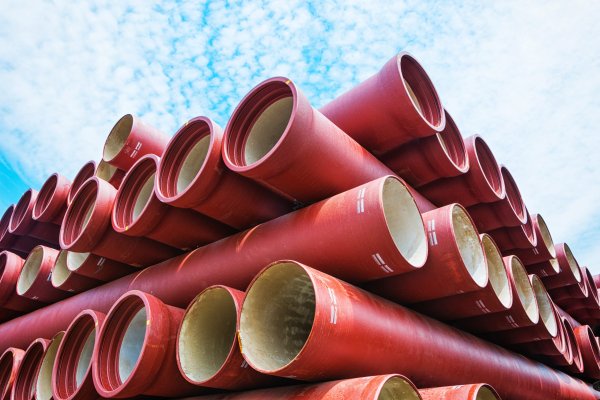
If you’ve worked on a pipeline project in the UAE, Oman, or Saudi Arabia, you already know that getting the pipes to site in perfect condition is half the battle. The other half? Making sure they stay that way until installation day.
HDPE pipes are tough, and that’s why engineers love them. But “tough” doesn’t mean “indestructible.”
Poor handling and improper storage can cause dents, surface damage, UV degradation, and deformation that you won’t always notice until it’s too late.
And in the GCC region, where summer temperatures regularly cross 45°C and UV radiation is intense, the risks are even higher than in milder climates.
This guide walks you through the practical best practices every project manager, engineer, and installer should follow.
HDPE (High-Density Polyethylene) is flexible and impact-resistant, but it has specific vulnerabilities, particularly to prolonged UV exposure, point loading, and improper bending.
In desert climates like those across Saudi Arabia, Oman, and the UAE, pipes left unprotected in direct sunlight can become brittle over time. Surface oxidation from UV can compromise the pipe wall’s integrity before a single joint is ever made.
The good news is that these problems are entirely preventable with the right approach.
Always use wide nylon slings or padded lifting straps when loading and unloading pipes. Never use chains, wire ropes, or hooks that contact the pipe surface directly. Even a small gouge can become a stress concentration point under pressure.
For larger diameter pipes (typically above 400mm), a spreader beam is recommended to distribute the load evenly and prevent the pipe from sagging in the middle during lifting.
One of the most common mistakes on site is dropping or dragging pipes across hard or rocky ground. Always use skids, wooden beams, or rollers when moving pipes horizontally. Even short-distance dragging on gravel can scratch the outer surface enough to reduce the pipe’s service life.
GCC construction sites are often open ended and let in dust, sand, insects and moisture. End caps should be kept on until the moment of jointing or installation. This is a simple step that many teams skip, and it causes real problems during commissioning.
HDPE pipes should never be bent sharply during transport or unloading. Always respect the minimum bending radius specified by the manufacturer. Forcing a pipe into a sharp curve, even briefly, can cause internal stress that isn’t visible on the surface.
In UAE, Saudi, and Omani project sites, storing pipes outdoors under direct sun for extended periods is one of the biggest risks. UV radiation degrades the outer surface of HDPE over time. If shade structures aren’t available, use opaque UV-resistant covers or tarpaulins specifically designed for pipe storage.
Important: Never use black polythene sheets that absorb heat. They they can actually increase the temperature at the pipe surface and accelerate degradation.
For straight pipe storage:
Never stack pipes on uneven ground or allow pipes to rest on fittings or joints.
Rotate your stock. Pipes that have been sitting in storage the longest should be the first ones used. This is especially relevant on large infrastructure projects in Saudi Arabia and Oman where material may be delivered months ahead of installation.
| Do’s | Don’ts |
| Use padded slings for lifting | Use chains or wire ropes on bare pipe |
| Store in shaded, covered areas | Leave pipes in direct sun for weeks |
| Keep end caps on until jointing | Leave pipe ends open on dusty sites |
| Stack on level, firm ground | Stack on uneven terrain or rubble |
| Follow first-in, first-out stock rotation | Ignore storage date of older stock |
| Respect minimum bending radius | Force sharp bends during unloading |
Doing all of the above correctly starts with sourcing pipes from a supplier who actually understands how HDPE behaves in extreme conditions.
Radius Star Piping is a GCC-based HDPE pipe manufacturer and supplier with deep experience serving construction, utility, and infrastructure projects across the UAE, Oman, and Saudi Arabia.
If your next project involves HDPE pipelines and you want to get the handling and storage right from day one, reaching out to Radius Star Piping is a smart first step.
Q1: How long can HDPE pipes be stored outdoors in the UAE or Saudi Arabia before they degrade?
Properly covered and shaded HDPE pipes can be stored for up to 12 months without significant quality loss. However, direct sun exposure in GCC climates can begin to cause surface UV degradation within weeks if pipes are unprotected. Always use opaque, UV-resistant covers and aim to install within six months of delivery when storing outdoors in hot climates.
Q2: Can HDPE pipes be stacked directly on the ground?
No. Pipes should never rest directly on bare ground, especially on rocky or uneven surfaces. Always use flat timber bearers or proper cradles spaced evenly along the pipe length. Ground contact can cause surface damage and localized deformation and makes pipes harder to inspect later.
Q3: What is the safest way to unload HDPE pipes on a construction site?
Use a crane or forklift fitted with wide nylon slings and not metal chains or hooks. For large diameter pipes, use a spreader beam to balance the load. Unload onto a clean, level surface with pre-positioned timber supports. Avoid dragging, rolling onto hard ground, or dropping from any height.