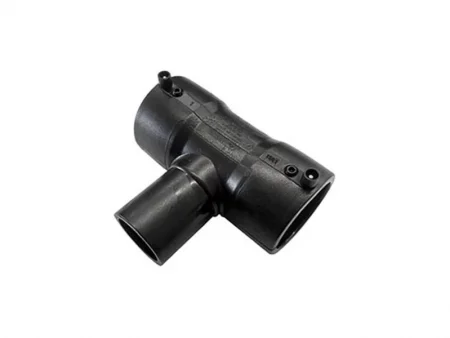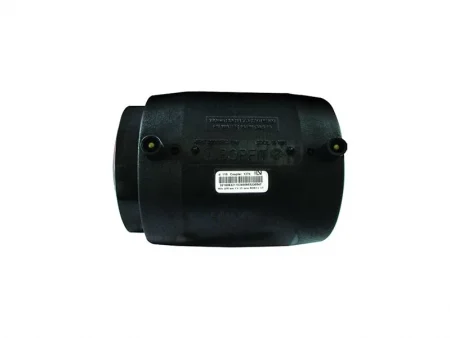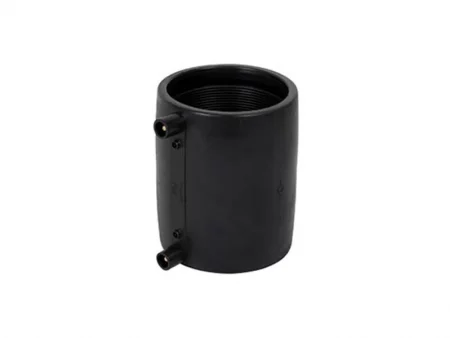
Radius Star Piping supplies a complete range of HDPE electrofusion fittings to contractors, utilities and project
owners across the UAE, Oman and Saudi Arabia. Operating from our base in Al Qusais Industrial Area, Dubai, we stock
electrofusion couplers, elbows, tees, reducers, saddles, tapping tees and end caps in PE100 and HDPE100+ material
grades, covering pipe diameters from 20mm to 1200mm.
Our electrofusion fittings are manufactured to ISO 4427-3 standards and are compatible with PE80 and PE100 HDPE pipes
across all standard SDR pressure classes. They are the specified jointing solution for service connections, branch
connections, confined space installations, and live tie-in situations where a butt fusion welder cannot be
positioned or operated.
HDPE electrofusion fittings are precision-manufactured polyethylene components with an embedded electrical resistance
wire coil inside the socket bore. When an electrofusion welding controller passes a controlled electrical current
through the coil, the wire generates heat that simultaneously melts the inner surface of the fitting and the outer
surface of the HDPE pipe inserted into it.
As the melted polyethylene interfaces cool under controlled conditions, they fuse at a molecular level to create a
permanent, homogeneous joint with no mechanical components, gaskets or sealing elements that could fail over time.
The finished electrofusion joint achieves the same pressure rating and service life as the pipe wall itself. It is
leak-proof, corrosion-resistant, resistant to ground movement and rated for a service life of 50 years or more under
continuous operating conditions.
Need Help Choosing the Right Electrofusion Fitting? Talk to an Expert.
Understanding the process ensures correct installation and consistent joint quality across all fitting types.
The pipe end is cut square using a pipe cutter or saw. The cut surface must be perpendicular to the pipe axis. Any
burrs or sharp edges are removed.
The outer surface of the pipe is scraped to remove the oxidised layer of polyethylene in the zone that will sit
inside the fitting socket. Scraping depth is typically 0.1mm to 0.2mm. This step is critical, as failure to scrape
correctly is the most common cause of electrofusion joint failure.
Both the scraped pipe surface and the inside of the fitting socket are cleaned with approved isopropyl alcohol wipes
and allowed to dry completely before assembly. Contamination at the interface will prevent proper fusion.
The pipe is inserted into the fitting socket to the marked insertion depth. Clamps or alignment tools are used to
hold the assembly in position throughout the fusion and cooling cycle. Movement during fusion or cooling compromises
joint integrity.
The electrofusion controller leads are connected to the fitting terminals. The controller reads the barcode or
datamatrix on the fitting to automatically set the correct fusion time and voltage for that fitting size and type.
The fusion cycle runs automatically. Fusion indicators on the fitting body confirm the cycle has completed
correctly.
The joint must remain clamped and undisturbed for the full cooling period specified by the fitting manufacturer
before any pressure or load is applied. Minimum cooling times range from a few minutes for small-diameter fittings
to over an hour for large-diameter fittings.
We supply a full range of electrofusion fitting types covering the connection configurations required on water, gas,
irrigation and industrial pipeline projects across the UAE, Oman and Saudi Arabia.
| Electrofusion Fitting | Purpose | Typical Applications |
|---|---|---|
| EF Coupler HDPE100+ | Joins two HDPE pipes in a straight line. | Pipe extensions, midline repairs, and installations where butt fusion welding cannot be used. |
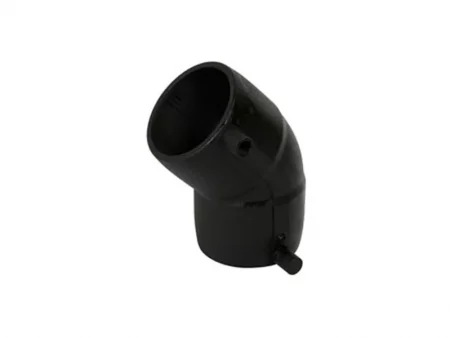
| EF Elbow 45° | Changes the pipeline direction by 45 degrees. | Gradual direction changes in above-ground and underground pipeline systems. |
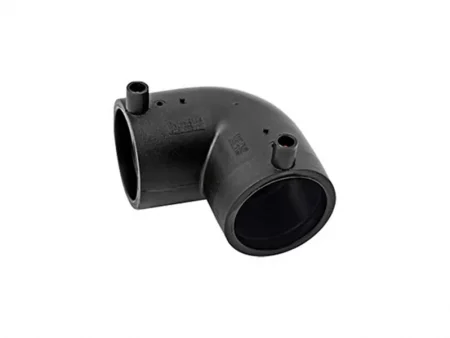
| EF Elbow 90° | Changes the pipeline direction by 90 degrees. | Service connections, meter stations, and confined installation areas. |
| EF 90° Equal Tee | Creates a 90-degree branch with the same pipe diameter on all three outlets. |
Water distribution, irrigation, and industrial pipeline branch connections. |
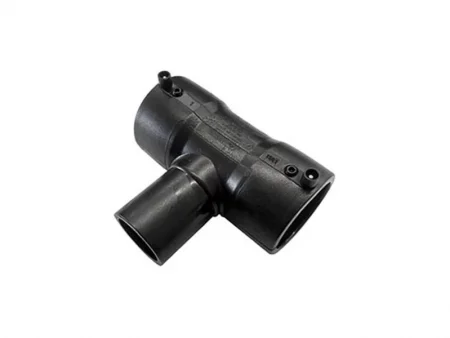
| EF Reduced Tee 90° | Creates a branch connection with a smaller outlet than the main pipeline. |
Service connections and industrial process piping. |
| EF Service Tee 360° | Allows a branch connection at any angle around the main pipe. |
Congested sites where installation flexibility is required. |
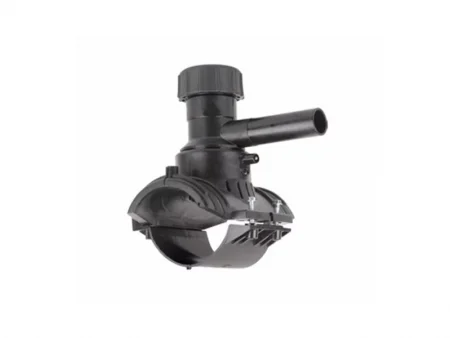
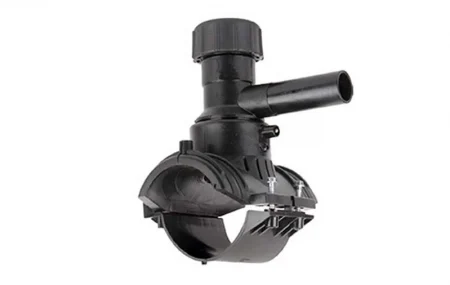
| EF Tapping Tee HDPE100+ | Creates a new branch connection on an existing live pipeline without shutting down the system. |
Live water and utility distribution networks. |
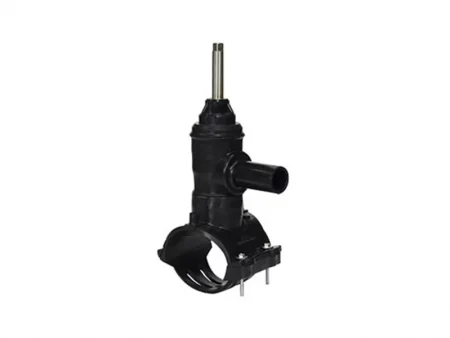
| EF Tapping Tee with Valve 360° | Combines a live tapping connection with an integrated shut-off valve. |
New service connections requiring future flow isolation. |
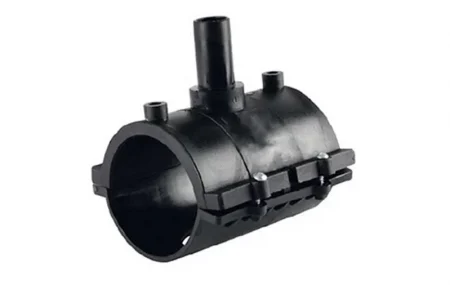
| EF Saddle HDPE100+ | Creates a branch outlet by fusing directly onto the outside of an existing pipe. |
Service connections, air valve installations, and instrumentation points on large pipelines. |
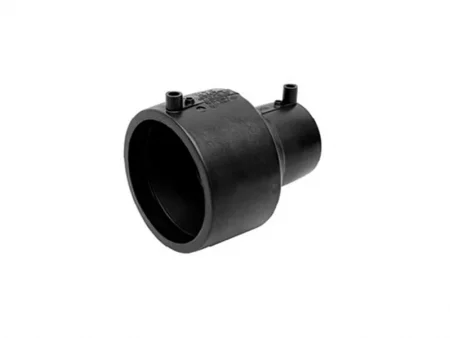
| EF Reducer | Connects two HDPE pipes with different diameters. | Pipeline diameter transitions, meter stations, and service connections. |
| EF Cap | Seals the end of an HDPE pipe. | Dead-end pipelines, pressure testing, storage, and future pipeline extensions. |
| What you need to do | Fitting to use |
|---|---|
| Join two pipes in a straight line | EF Coupler |
| Change direction by 45 degrees | EF Elbow 45° |
| Change direction by 90 degrees | EF Elbow 90° |
| Create a same-diameter branch | EF Equal Tee 90° |
| Create a smaller-diameter branch | EF Reduced Tee 90° |
| Branch at any rotational angle | EF Service Tee 360° |
| Connect to a live pressurised main | EF Tapping Tee |
| Connect to live main with shut-off | EF Tapping Tee with Valve 360° |
| Add a branch without cutting the pipe | EF Saddle |
| Step down to a smaller pipe diameter | EF Reducer |
| Permanently seal a pipe end | EF Cap |
Not Sure Which Fitting Your Project Needs? Get Product Recommendations.
Choosing the right HDPE electrofusion fitting helps improve pipeline performance, simplifies installation, and
reduces the risk of future maintenance. Before selecting a fitting, consider the type of connection, pipe size,
operating pressure, and installation conditions.
Start by determining what the pipeline needs. Use an electrofusion coupler to join two pipes in a straight line, an
elbow to change direction, a tee to create a branch connection, a reducer to connect different pipe sizes, or an end
cap to seal the end of a pipeline.
Select a fitting that matches the pipe diameter and pressure class. Using the correct size and Standard Dimension
Ratio (SDR) rating helps create a secure fusion joint and ensures the pipeline performs as designed.
Most modern HDPE pipelines use PE100 or PE100+ materials. Always make sure the fitting is compatible with the HDPE
pipe being installed and complies with the required project specifications.
Electrofusion fittings work well in confined spaces, repair work, branch connections, and live pipeline modifications
where butt fusion equipment cannot be positioned. Choose the fitting that best suits the available working space and
site conditions.
For infrastructure, utility, industrial, and water supply projects, choose electrofusion fittings that comply with
recognised industry standards and meet the quality requirements specified for the project.
Not Sure Which Fitting Is Suitable for Your Application? Contact the Radius Star Piping team.
We hold ready stock of our full electrofusion fittings range at our Dubai warehouse in Al Qusais Industrial Area.
Standard orders are dispatched within 24 to 48 hours. Road freight delivery to Muscat, Riyadh, Jeddah and Dammam
typically takes two to four working days from dispatch.
Every fitting we supply carries material certification confirming PE100 or HDPE100+ grade polyethylene, manufactured
to ISO 4427-3. Material certificates are provided as standard and are formatted for inclusion in project quality
documentation.
Our fittings carry barcode and datamatrix identification that is readable by all major electrofusion controller
brands. The controller reads the fitting data and automatically sets the correct fusion parameters, eliminating the
risk of incorrect manual parameter entry.
Sourcing your complete electrofusion fitting range, including couplers, elbows, tees, reducers, saddles and tapping
tees, from one supplier eliminates compatibility issues between fittings from different manufacturers and simplifies
project procurement and quality documentation.
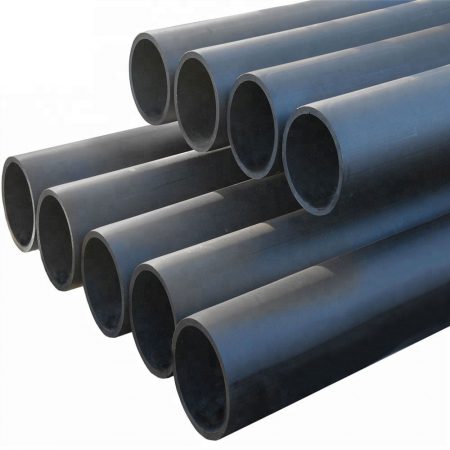
Alongside electrofusion fittings, we supply HDPE pipes, butt fusion fittings, fabricated fittings and the
electrofusion welding controllers and butt fusion welding machines needed to install them. Single-source supply from
Radius Star Piping covers your entire HDPE pipe system requirement.
Radius Star Piping supplies HDPE electrofusion fittings to contractors, utilities and project owners across the UAE,
Oman, Bahrain and Saudi Arabia. We hold ready stock in Dubai for fast dispatch and can advise on fitting selection,
pressure class and controller compatibility for your specific project.
Call us at +971 4 269 3863 or email info@radiusstarpiping.com to
discuss your requirements.
HDPE electrofusion fittings are used to join, branch, redirect and terminate HDPE pipe systems by fusing the fitting
to the pipe using an embedded electrical resistance coil. They are the specified solution for service connections,
confined space joints, branch connections on live mains, repairs and any jointing situation where a butt fusion
welding machine cannot be positioned or operated.
Electrofusion fittings contain an embedded wire coil that melts the fitting and pipe interface when electrical
current is applied, creating a fused joint around the outside of the pipe. Butt fusion welding joins two pipe ends
directly by heating and pressing them together without any fitting. Electrofusion is used where access is confined
or a branch connection is needed. Butt fusion is preferred for straight pipe runs and large-diameter pipes where the
machine can be positioned correctly.
Yes. Our PE100 electrofusion fittings are manufactured to ISO standards and are suitable for gas distribution
pipeline applications. Gas pipeline projects in the UAE and Saudi Arabia specify fittings that meet the pressure
rating requirements for gas service pressures and carry the relevant ISO certifications. Contact our team to confirm
fitting selection for specific gas pipeline specifications.
Some electrofusion fittings, such as electrofusion tapping tees, are designed for making new branch connections on
live pressurised HDPE pipelines without shutting down the system. However, standard electrofusion fittings are
typically installed on pipelines that have been isolated and depressurised. The correct fitting depends on the
application and project requirements.
You need an electrofusion welding controller, a pipe scraper or scraping tool, isopropyl alcohol cleaning wipes, pipe
clamps or alignment tools and a pipe cutter. The electrofusion controller reads the fitting barcode and sets the
fusion parameters automatically. We supply electrofusion welding controllers alongside our fittings range.
A correctly made electrofusion joint has a design service life equal to the HDPE pipe itself, typically 50 years or
more at rated operating pressure and temperature. The joint contains no mechanical components, sealing elements or
gaskets that degrade over time.
The most common cause of electrofusion joint failure is inadequate pipe surface preparation before fusion. If the
oxidised outer layer of the pipe is not fully scraped away in the socket zone, or if contamination is present at the
interface, the polyethylene surfaces will not fuse correctly. The critical quality steps are proper scraping,
cleaning with isopropyl alcohol, and maintaining cleanliness up to the point of fusion.
Yes. We supply electrofusion fittings across the UAE, Oman, Saudi Arabia and Bahrain from Dubai. Standard orders
usually reach Muscat in two to three working days and Riyadh and Jeddah in three to four working days by road
freight. Contact our team at +971 4 269 3863 for current stock availability and delivery timelines.
Yes. Our electrofusion fittings are compatible with both PE80 and PE100 HDPE pipes. The fitting material is PE100 or
HDPE100+ grade, and the fusion process bonds effectively to both PE80 and PE100 pipe surfaces. Confirm the pipe
material grade when placing your order so we can advise on any pressure rating considerations.