
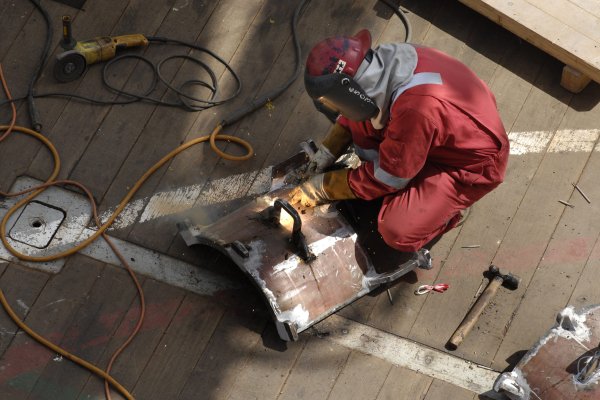
Safe HDPE welding depends on proper operator training, correctly maintained fusion equipment, clean pipe surfaces, accurate heater plate temperature, correct pipe alignment, suitable personal protective equipment, and thorough post weld inspection. Radius Star Piping applies these guidelines across butt fusion welding machines and electrofusion welding machines on projects throughout the UAE, Saudi Arabia, and Oman. Technicians who follow these guidelines produce strong fusion joints, reduce workplace risk, and prevent costly installation failures during HDPE pipeline installation.
HDPE welding relies on controlled heat and pressure rather than an open flame or electric arc, but the heater plate operates at high temperatures during the butt fusion process. Contact with this surface causes serious thermal burns, and a poorly executed joint can fail under pressure long after installation.
HDPE welding involves high temperatures, heated equipment, and moving machine components. Following approved welding procedures and using the correct personal protective equipment helps reduce the risk of burns, injuries, and equipment-related accidents throughout the welding process. Safety in HDPE welding protects both the crew performing the work and the long-term integrity of the pipeline itself.
Technicians must inspect the fusion machine before every shift. A worn heater plate, a leaking hydraulic line, or an uncalibrated pressure gauge produces inconsistent fusion cycles and weak joints. Operators should verify the generator power supply, check the hydraulic system for leaks, and confirm that the heater plate reaches and holds the required temperature. Radius Star Piping supplies and supports butt fusion welding equipment for rental and contracting projects, helping customers maintain reliable welding performance on site.
Pipe surfaces must stay free of dirt, moisture, and oxidation before facing and heating begin. Contaminated pipe ends prevent the polymer chains from bonding correctly during the melt phase, which weakens the joint from the inside without any visible sign on the surface. Operators should confirm pipe dimensions and material grade match the project specification, since mismatched wall thickness or SDR rating disrupts pressure and temperature settings during fusion.
Personal protective equipment reduces specific risks tied to the fusion process rather than serving as a generic checklist item.
Butt fusion welding joins two pipe ends by heating both faces on a shared heater plate, then pressing them together under controlled pressure. Successful butt fusion welding depends on maintaining the correct heater plate temperature, fusion pressure, and heating cycle for the pipe and fitting being joined. Operators should always follow the recommended welding procedure and equipment guidelines for the application.
Operators should follow the recommended welding parameters for the pipe, fittings, and fusion equipment throughout the welding process. During the heating cycle, operators should never disturb pipe alignment, since even a small offset at this stage produces a permanent misalignment in the finished joint. Personnel should also stay clear of the moving carriage, since the hydraulic system generates significant force when bringing pipe ends together.
Electrofusion welding uses a fitting with embedded heating wire coils that melt the pipe surface and the fitting bore simultaneously when current passes through the coil.
Operators should scrape the pipe surface with a proper peeling tool immediately before fitting installation, since oxidized or contaminated pipe surfaces prevent proper fusion even when the electrical cycle runs correctly.
Operators should confirm the correct welding parameters before starting the fusion cycle and ensure all electrical connections are secure throughout the welding process.
Operators must check that electrical connections sit fully seated before starting the cycle, since a loose connection interrupts current delivery and produces an incomplete weld.
After the fusion cycle finishes, the joint needs its full specified cooling period before any clamp removal or pressure testing, since a joint disturbed during cooling loses its structural integrity permanently.
Using compatible electrofusion fittings and following the recommended welding procedure helps produce reliable and consistent fusion joints.
Several recurring mistakes account for most weld failures and safety incidents on HDPE projects.
HDPE joints must cool naturally under clamp pressure for the full time specified by the fusion procedure. Operators should never pour water on a fresh joint to speed cooling, since rapid temperature change introduces internal stress that weakens the fusion zone.
Once the joint cools, technicians should inspect the weld bead for uniform rollback around the full pipe circumference and check for any visible cold weld indicators such as an uneven bead or a visible gap. Recording welding information where required helps support quality control, project documentation, and later inspection or pressure testing.
| Inspection Item | Verify Before Welding |
| Fusion machine condition | Confirmed |
| Heater plate cleanliness | Confirmed |
| Temperature settings | Confirmed |
| Pipe alignment | Confirmed |
| Pipe end preparation | Confirmed |
| PPE availability | Confirmed |
| Work area safety | Confirmed |
| Cooling time observed | Confirmed |
Safety requirements can vary depending on the project location, pipeline application, and site conditions. Whether the work involves water distribution, gas pipelines, industrial facilities, or infrastructure projects, operators should inspect the work area, follow approved welding procedures, and comply with the project’s safety requirements before starting any HDPE welding operation.
Radius Star Piping supports HDPE pipeline projects across a wide range of industries with qualified personnel, welding equipment, and technical services.
Safe HDPE welding operations combine trained operators, well-maintained equipment, precise temperature and pressure control, and disciplined inspection at every stage of the fusion process. These guidelines protect crews from burns and electrical hazards while producing joints that hold up under real pipeline pressure for decades.
Contractors and project engineers who want experienced support on butt fusion or electrofusion welding can contact Radius Star Piping to discuss equipment, fittings, and technical guidance for an upcoming HDPE pipeline project.
What PPE is required for HDPE welding?
Operators should wear heat-resistant gloves, eye protection, flame-resistant clothing, and steel-toe boots. Additional electrical safety PPE may be required for electrofusion welding depending on the equipment being used and site safety requirements.
What temperature is used for HDPE butt fusion?
The correct heater plate temperature depends on the HDPE pipe, fitting, and welding procedure being used. Operators should follow applicable industry standards, such as ASTM F2620, along with the pipe and equipment manufacturer’s recommended welding parameters.
Why should HDPE joints cool naturally?
Forced cooling introduces internal stress into the fusion zone, which can create hidden weaknesses that only appear once the pipeline goes into service under pressure.
Does Radius Star Piping provide certified welding operators for HDPE projects?
Radius Star Piping provides industry-qualified technicians for HDPE pipeline contracting projects. The company also offers HDPE welding machine rental services for contractors managing their own installation work.
What causes HDPE weld failure on a completed pipeline?
Contaminated pipe surfaces, incorrect heater temperature, misaligned pipe ends, and disturbed cooling periods account for most joint failures found during later pressure testing or excavation.
Can Radius Star Piping repair a failed HDPE fusion joint?
Yes, Radius Star Piping offers repair services for damaged or failed HDPE joints across water, gas, and industrial piping systems.
Is operator certification important for HDPE welding?
Operator certification helps ensure technicians understand proper welding procedures, equipment operation, and inspection practices, contributing to safer installations and more reliable HDPE fusion joints.
What HDPE pipe sizes does Radius Star Piping supply for welded pipeline projects?
Radius Star Piping manufactures and supplies HDPE pipes in sizes ranging from 20 mm to 1200 mm for water distribution, gas pipelines, mining, drainage, and industrial applications.